
Founding Families

The whole school year, ready to teach.

Stonepine is a complete homeschool curriculum for children ages 3 to 12, in keeping with your family’s faith and values. It plans the year, writes every lesson in full with the reading and worksheets to print, and keeps a record of what your child has mastered.

See what Stonepine does
Early access begins December 2026. Your first 30 days are free with one learner. A welcome box for the first 100 families.
A child at a kitchen table building a wooden model plane
Ages 3 to 12
Preschool through sixth grade, each child at their own pace in each subject.
Every core subject
Reading, writing, math, science, history, social studies, and art and music, with learning habits alongside.
More than 300 milestones
The skills of each age, checked at the start and recorded as your child masters them.
Every lesson in full
Goals, steps and timing, with the reading and worksheets printed for your table.
A Founding Family price
$49.99 a month for your first child and $29.99 a month for each child after, for your first year. Then $59.99 and $34.99. Your first 30 days are free with one child.

What Stonepine does

Stonepine does the planning. You do the teaching.

A year of school at home asks a great deal of a parent: a curriculum to choose, lessons to plan, readings to find and records to keep. Stonepine takes on that work, so your time goes to teaching your children.

Starts with your child

Tell us your child’s age, interests and goals, and check off the skills they already have. The plan begins from what they know.
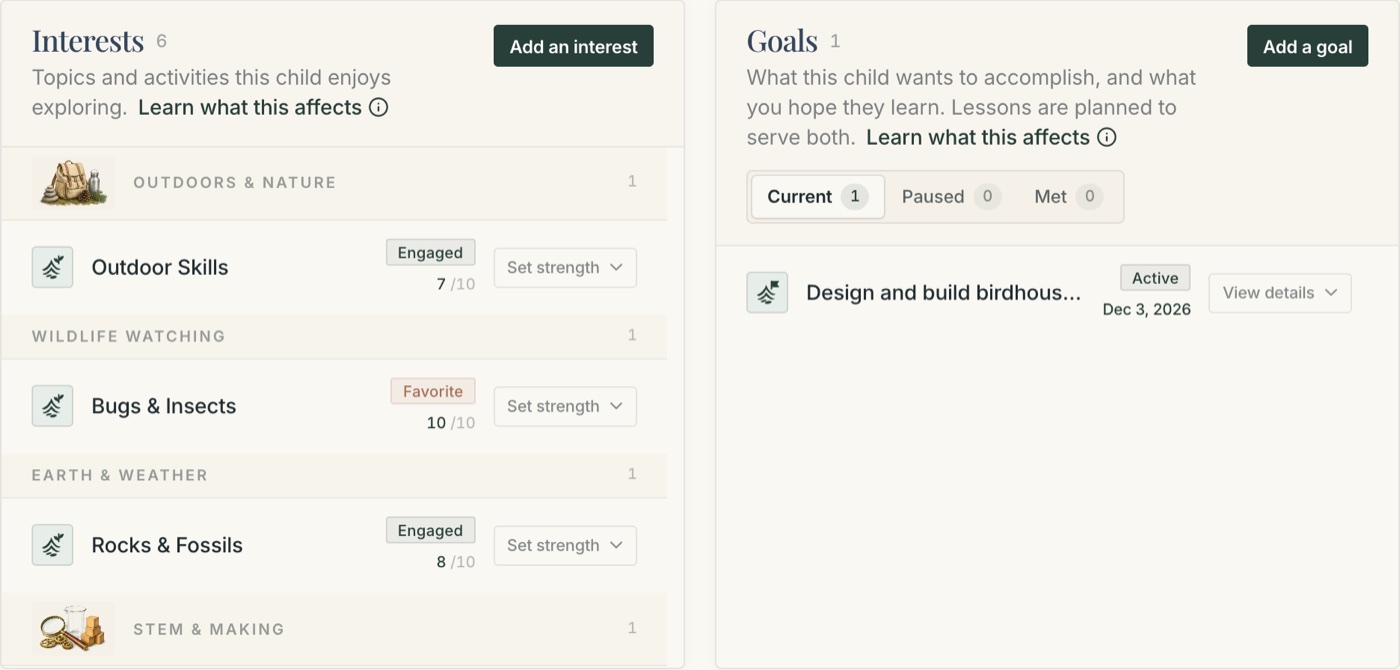
Owen’s interests in Stonepine: outdoor skills, bugs and insects, and rocks and fossils, beside his goal to design and build birdhouses

Builds units from what they love

Stonepine proposes units of study for each child: the stories on old stamps for a collector, patchwork quilts for a child who likes to make things. Each unit carries reading, writing, math or science through the interest, and shows the subjects it covers and the days it fits. You choose which go on the calendar.
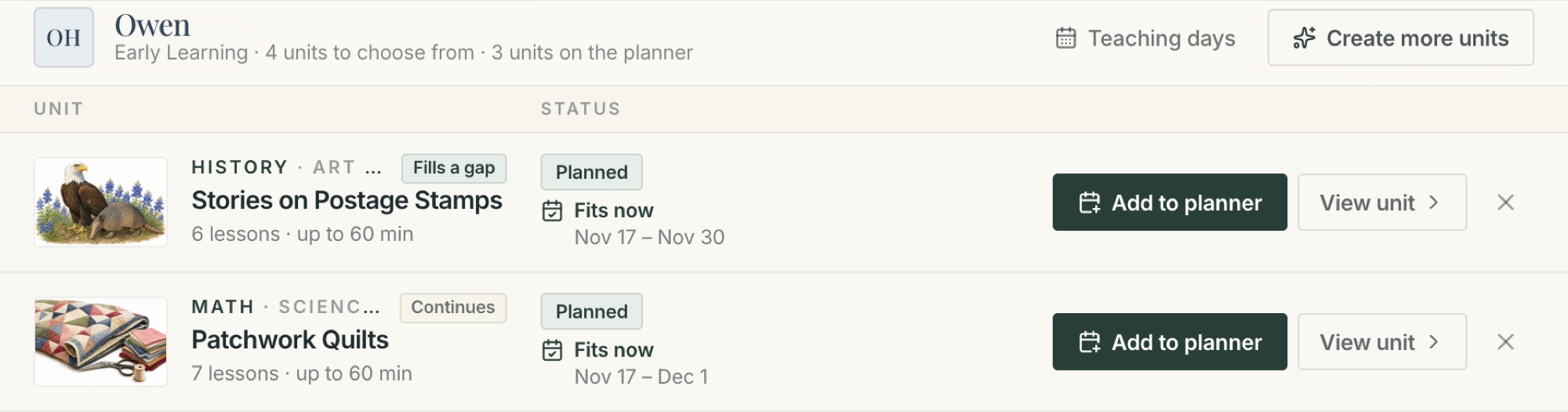
Two units of study proposed for Owen on the Learning page: Stories on Postage Stamps, a history and art unit of six lessons that fills a gap, and Patchwork Quilts, a math and science unit of seven lessons, each with the days it fits and an Add to planner button

Plans the school year

The units you choose go on your family calendar, around your school days and breaks. Each child has their own learning days, and every learning day ahead has a lesson.
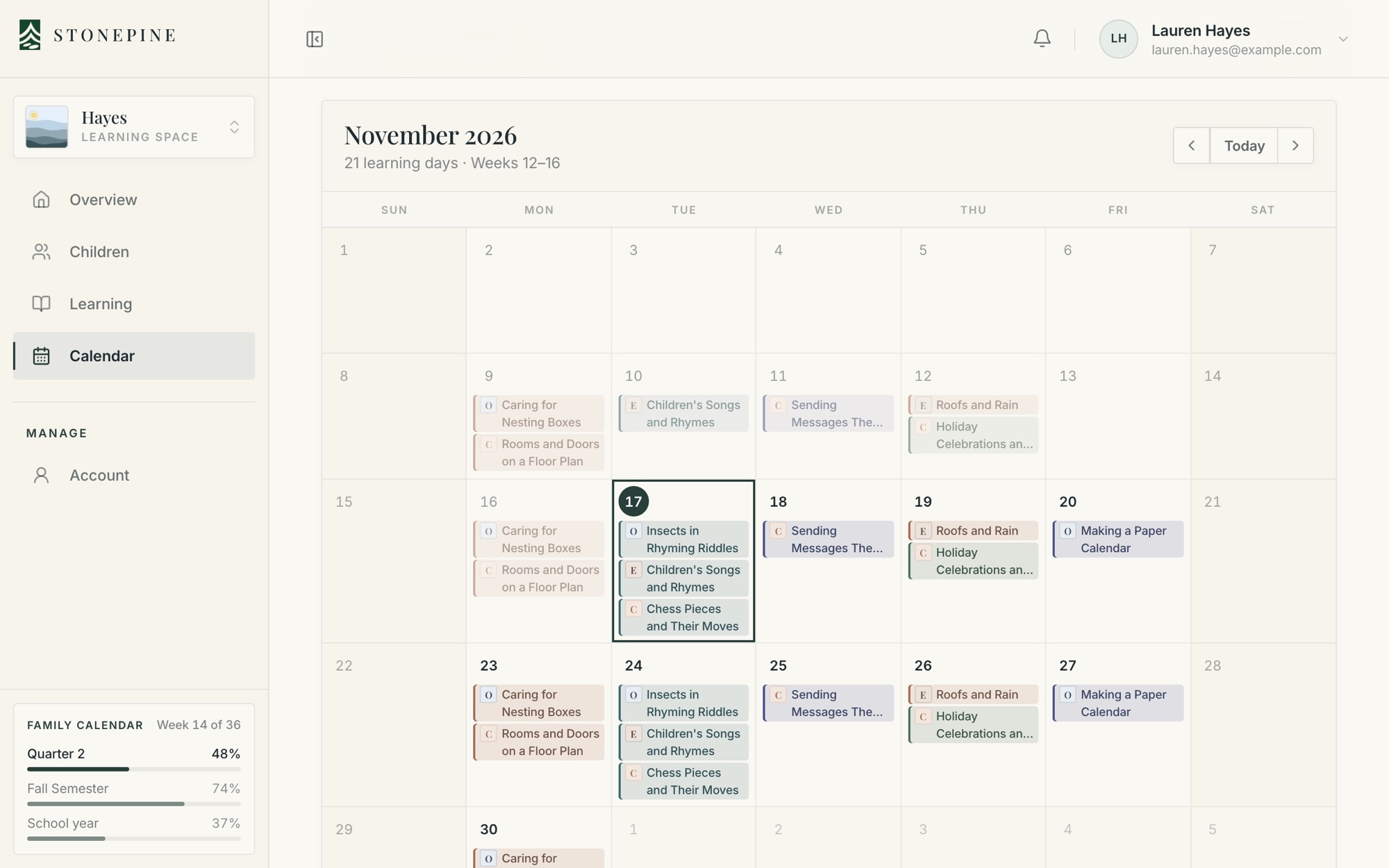
The Stonepine calendar for November: the learning days of Owen, Eli and Claire, each child’s lessons on their own days and today’s three lessons marked

Keeps the record

Milestones for every age show what your child has mastered and what comes next. Each child moves ahead when the work is mastered, not before.
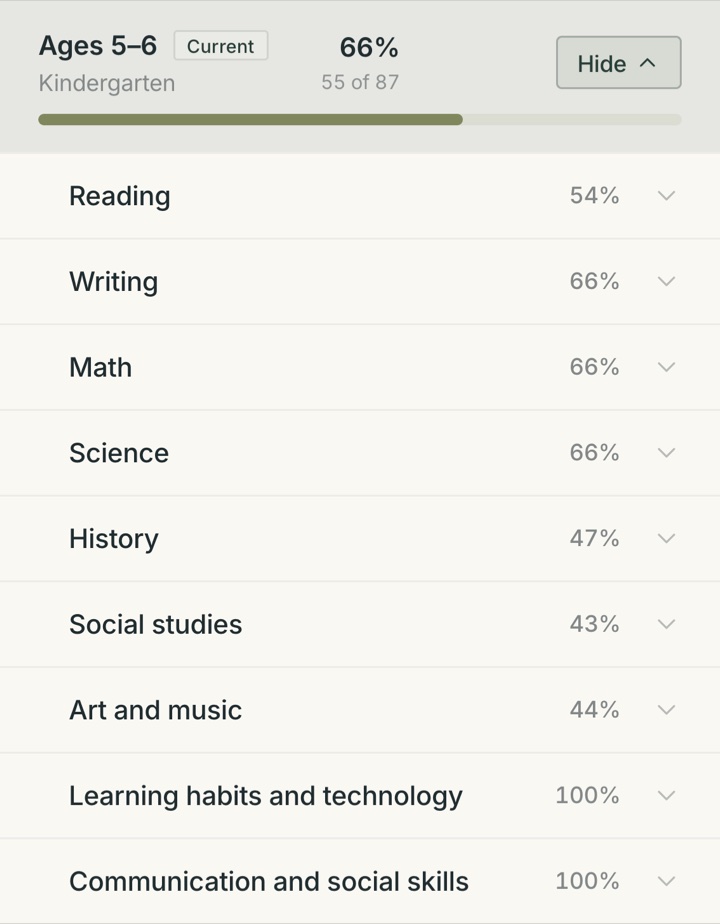
Owen’s milestones for ages 5 to 6 in Stonepine, 66 percent overall, with his progress in reading, writing, math, science, history, social studies and the arts

Writes every lesson in full

Each lesson sets out its goals, steps and timings, with the words to say, the answers to expect and the pages to print: the lesson plan, the reading and the worksheets. There’s no book, video or website to find.
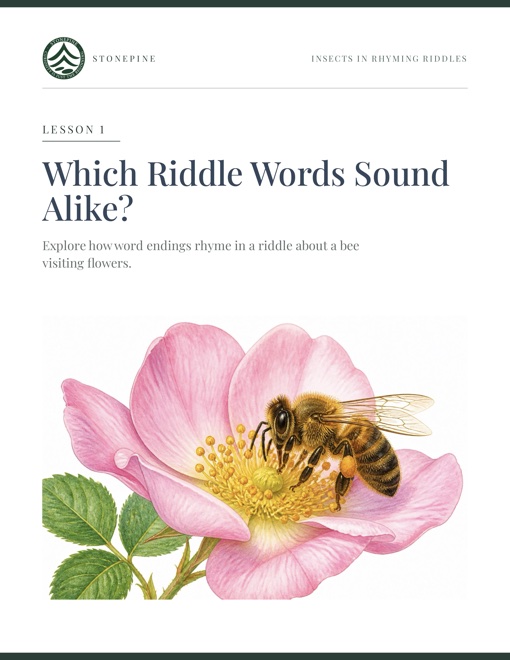
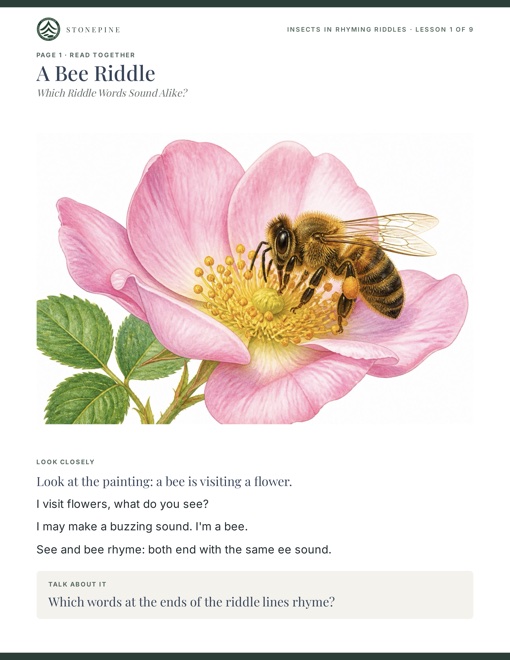
The cover of the lesson plan for Which Riddle Words Sound Alike?, lesson 1 of Insects in Rhyming Riddles, with its painting of a honeybee on a wild rose
Lesson plan
A page to read together, A Bee Riddle: a bee visits flowers, and see and bee rhyme because both end with the same ee sound
Reading
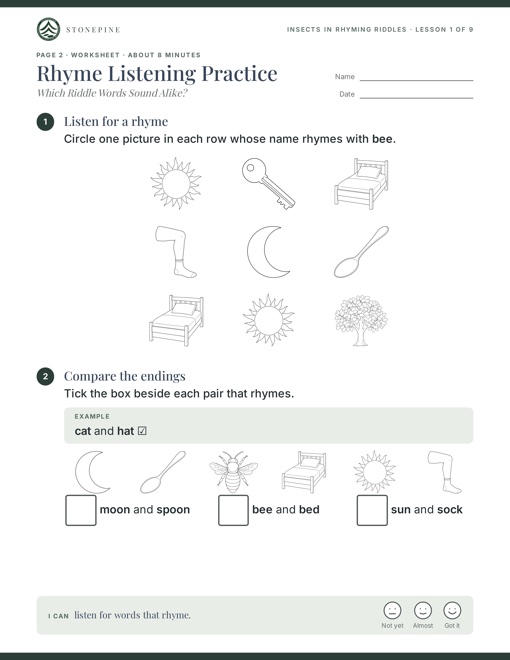
Rhyme Listening Practice, a worksheet for circling the picture in each row whose name rhymes with bee, then ticking the pairs that rhyme
Worksheet
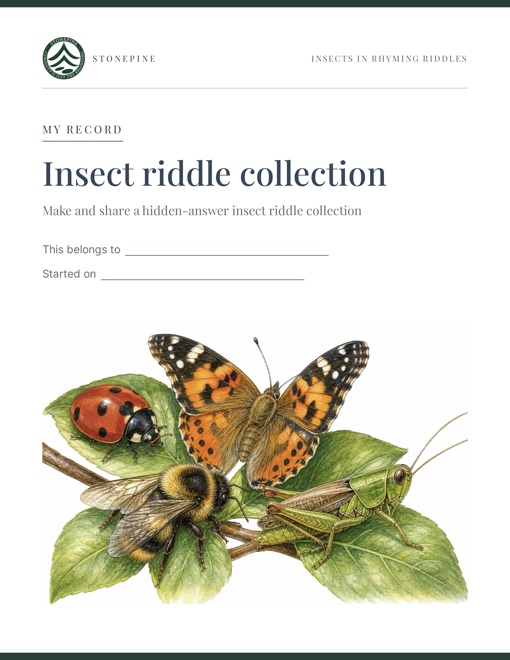
The cover of the insect riddle collection, the record Owen adds to through the unit, with a ladybug, a butterfly, a bumblebee and a grasshopper on leaves
Record cover

Plans around how they learn

Tell Stonepine what shapes how your child learns, with or without a diagnosis, and every unit and lesson is planned around it. Stonepine never names a need in what it writes.
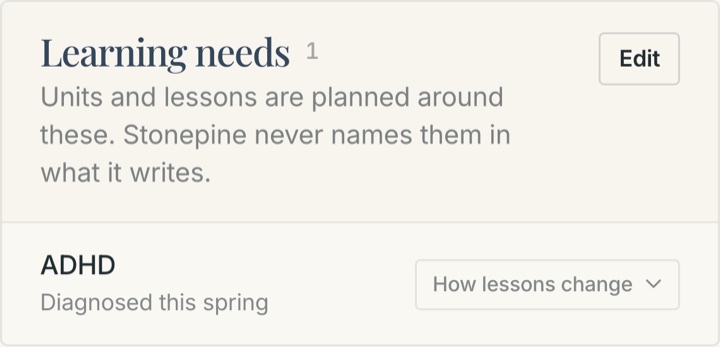
Owen’s learning needs in Stonepine: ADHD, diagnosed this spring, with how his lessons change for it

Teaching a lesson

Open the lesson. Everything is there.

Each lesson is written for the parent who teaches it. Which Riddle Words Sound Alike? is the first lesson of Owen’s unit on insects in rhyming riddles, and this is what it brings to the table.

  1. Get ready

    What to print, what to gather from around the house, and how to set up. A pencil, scissors and tape: nothing to buy.

  2. Teach

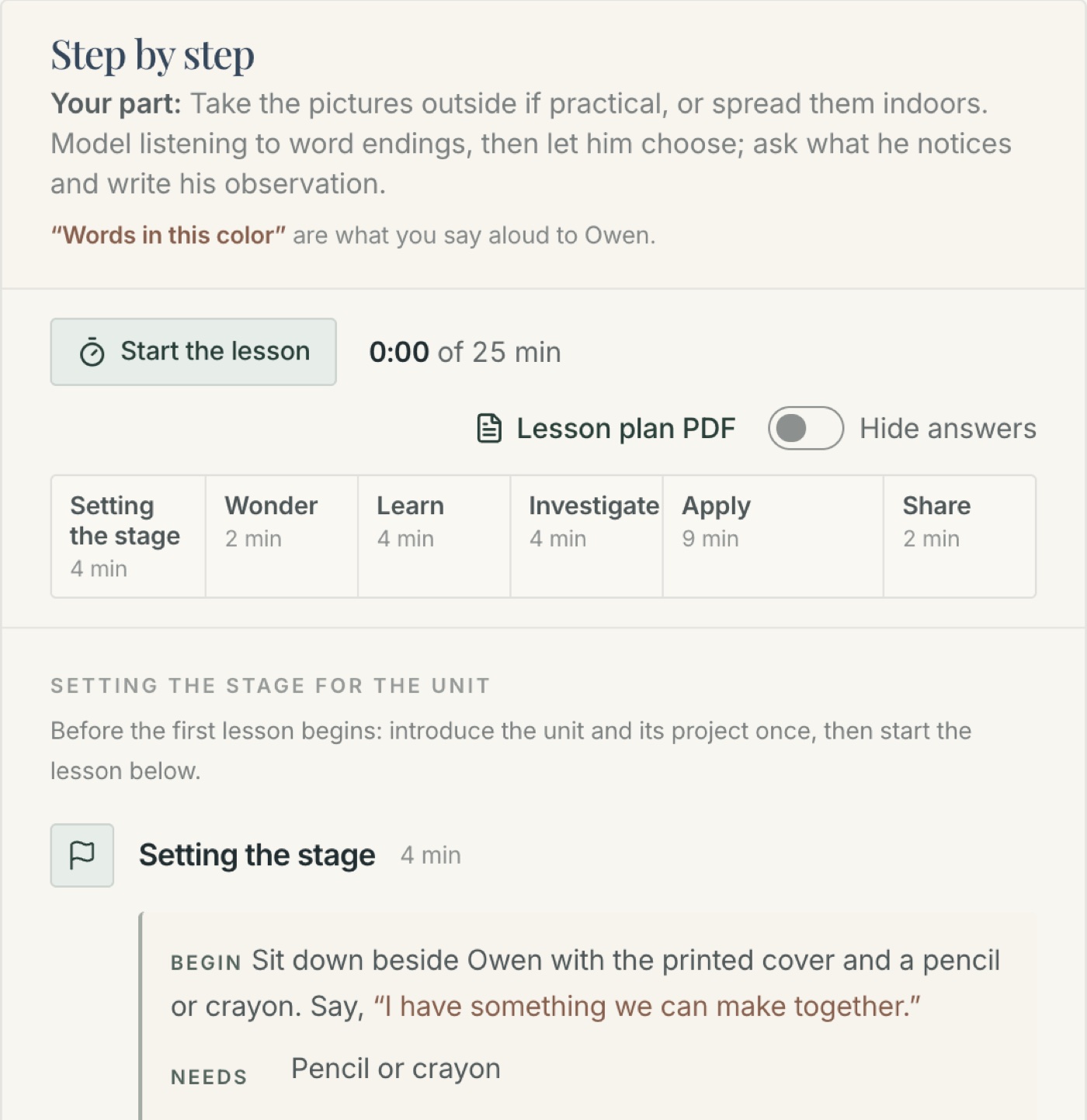
    Each part of the lesson with its minutes, the words to say, the answers to expect, and a tip for when it doesn’t go to plan.

  3. Print

    The lesson plan, the reading and the worksheets print together. Your child works from paper, not a screen.
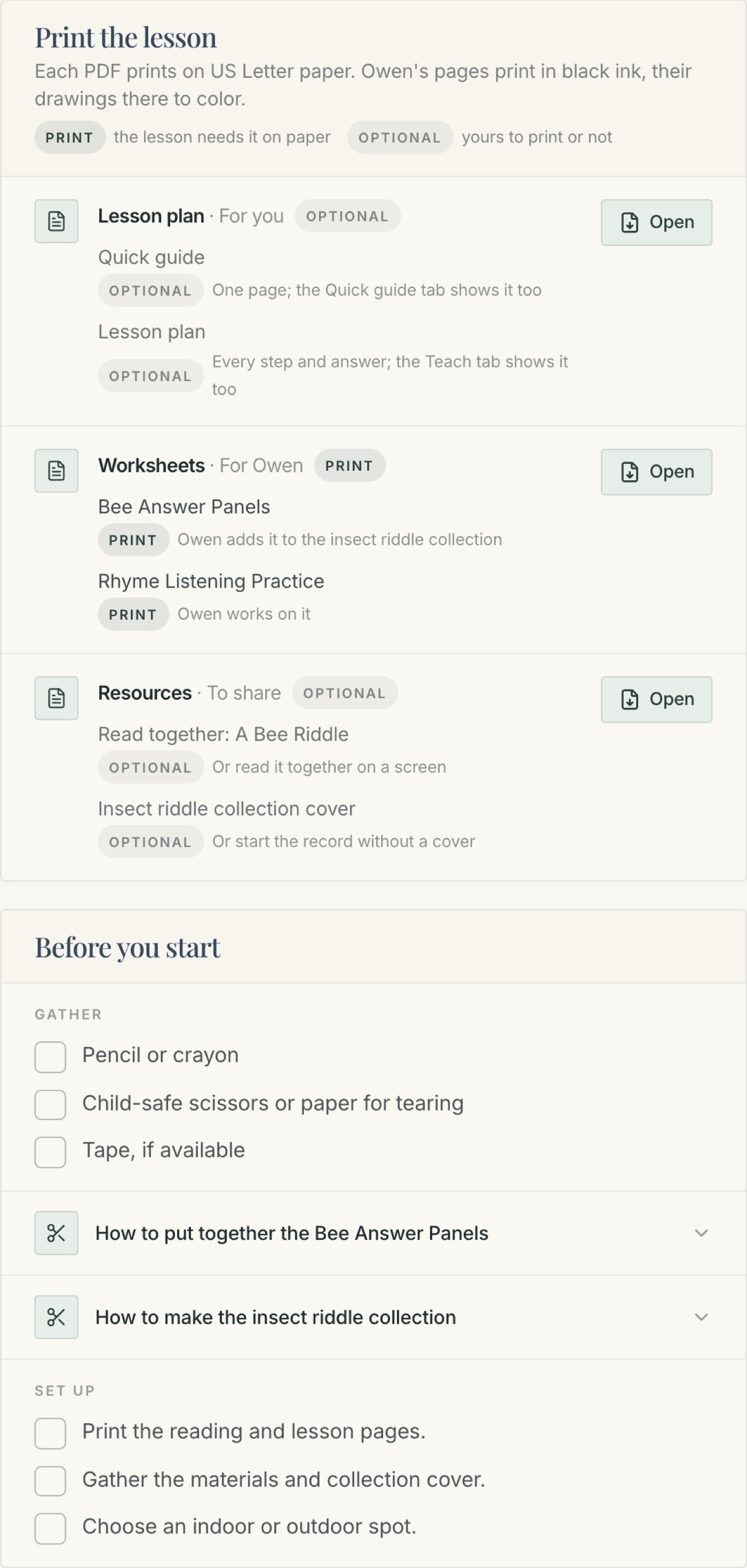
Get ready, for Which Riddle Words Sound Alike?: print the two worksheets, Bee Answer Panels and Rhyme Listening Practice, with the lesson plan and the reading optional, then gather a pencil or crayon, child-safe scissors and tape
Before you start
Step by step, for Which Riddle Words Sound Alike?: your part as the parent, the lesson’s six parts with their minutes, and the first words to say to Owen as you set the stage with the printed cover and a pencil
Step by step

Parent-led

Your family sets the course.

Stonepine prepares the work. Every decision about your children’s education stays with you.

You choose what they study

Stonepine proposes units of study for each child. You decide which go on the calendar, and you can take any of them off.

Your faith, as you wish

You decide how much your family’s faith shapes the lessons, from not at all to woven through every unit.

Taught at your table

You teach from printed pages, and every lesson brings its own reading. Your child doesn’t need a screen, and you don’t need to buy books.

Your child’s privacy

You decide what Stonepine knows about your child, and you can change it at any time.

The whole family

Three children, three paces, one calendar.

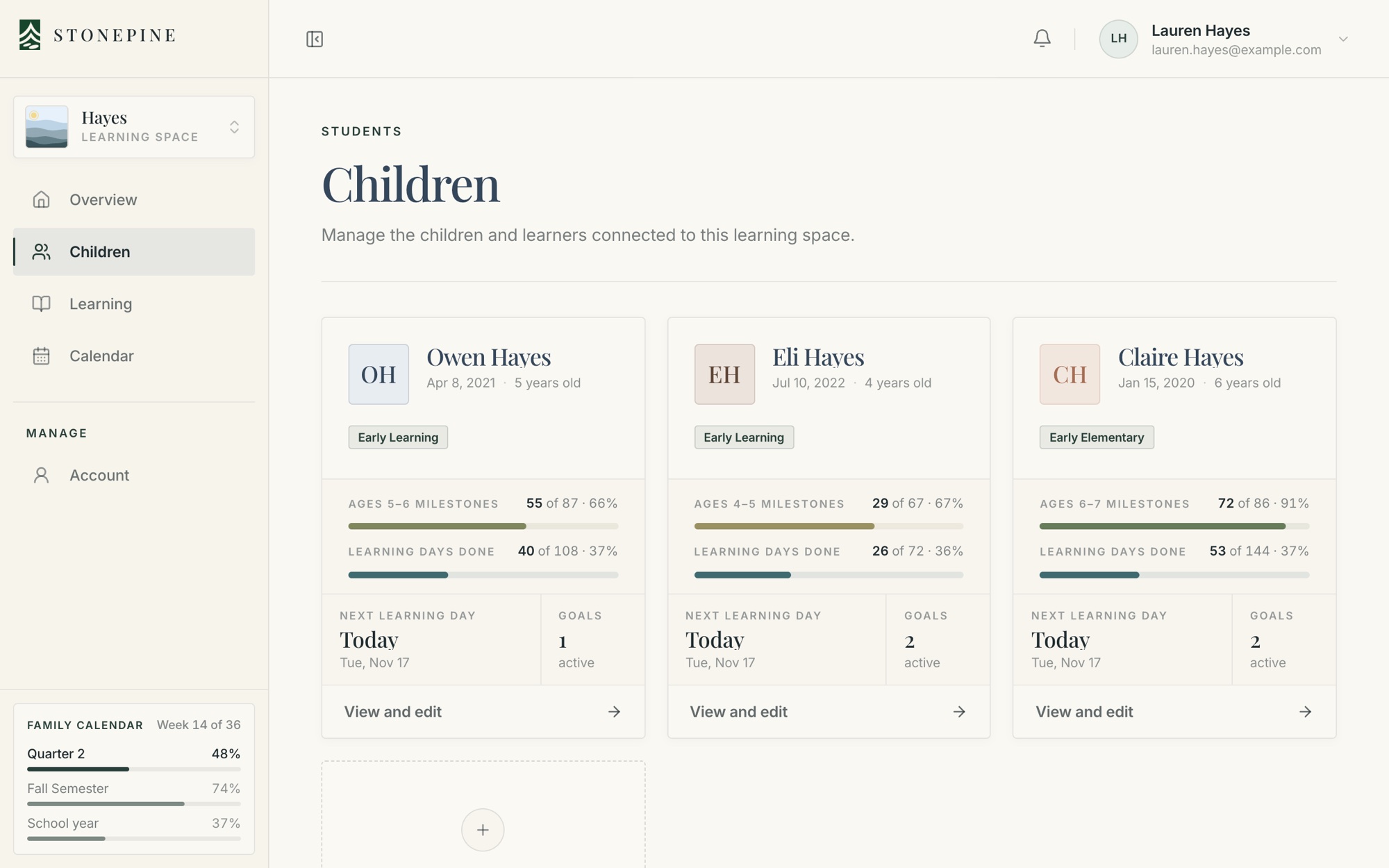
Add each of your children. Each one has their own interests, goals, milestones and units, and they all share the family calendar, with the same school days and breaks. The overview shows every child’s lesson for the day in one place.
  • A four-year-old and a six-year-old can learn side by side, each at their own level.
  • Each learner has a seat on the family’s subscription, at one price per learner.
  • Every page in Stonepine filters to one child or shows them all.
The Children page in Stonepine: Owen, 5, Eli, 4, and Claire, 6, each with their milestones for their age, learning days done, their next learning day and their goals

Questions families ask

What parents want to know first.

Is Stonepine a complete curriculum or a supplement?
Stonepine is designed to be a complete homeschool curriculum for children ages 3 to 12. It covers reading, writing, math, science, history, social studies, art, and music. From planning the school year to preparing individual lessons and tracking progress, Stonepine brings everything together in one place.
What does it cost?
Founding Families receive special introductory pricing for their first year: $49.99 per month for the first child and $29.99 for each additional child. After the first year, standard pricing applies. Annual subscriptions are also available at a discount. New families can explore Stonepine with a 30-day free trial for one child.
Do I need to buy books or materials?
Stonepine provides the reading materials, worksheets, and instructions for each lesson. Most hands-on activities use ordinary household items, and any additional materials are identified in advance. There’s no separate curriculum or textbook package to purchase.
Does my child learn on a screen?
No. Stonepine is designed for parent-led, hands-on learning. Your child learns through printed materials, meaningful activities, experiments, reading, and real-world exploration. The technology works behind the scenes to help you plan, prepare, and teach.
Do I teach the lessons, or does Stonepine?
You remain your child’s teacher. Stonepine does the planning and preparation, providing clear instructions, teaching prompts, activities, and expected learning outcomes. You guide the experience, ask the questions, and help your child develop understanding.
How much time does it take each day?
That depends on your child’s age, learning needs, and your family’s schedule. Younger children generally work in shorter sessions, while older students spend more time exploring subjects in depth. You choose your teaching days and preferred lesson lengths, and Stonepine builds a schedule around them.
My child has ADHD, dyslexia, or another learning need. Can Stonepine accommodate that?
Stonepine considers how your child learns, not just what they need to learn. You can share learning differences, challenges, and preferences, with or without a formal diagnosis. Stonepine uses that information to adapt lesson structure, activities, and instructional approaches while maintaining appropriate academic goals. Your child’s learning needs are kept private and are not identified in their printed materials.
How does Stonepine handle our faith?
Your family’s beliefs are your decision. You choose whether faith is incorporated into lessons and how prominently it appears, from a secular approach to faith woven throughout the curriculum. Academic expectations remain consistent regardless of your preference.
How are Stonepine’s lessons created?
Stonepine uses AI to develop personalized units and lessons based on your child’s interests, abilities, learning needs, and academic milestones. But personalization isn’t the same as leaving education to an algorithm. Stonepine establishes the educational framework, learning expectations, and instructional structure that guide lesson creation.

Founding Families

Be among the first to teach with Stonepine.

Founding Families start teaching with Stonepine in December 2026, ahead of our launch in early 2027.

  1. Today

    Save your place

    Join our Founding Families and choose a complimentary learning experience to try with your child. We’ll send it to your inbox.

  2. December 2026

    Early access opens

    Add your children, choose their first units and start teaching at the Founding Family price. Your experience helps shape what we build.

  3. Early 2027

    Stonepine opens to every family

    Subscribe within the first 30 days of launch to receive official Founding Family recognition.
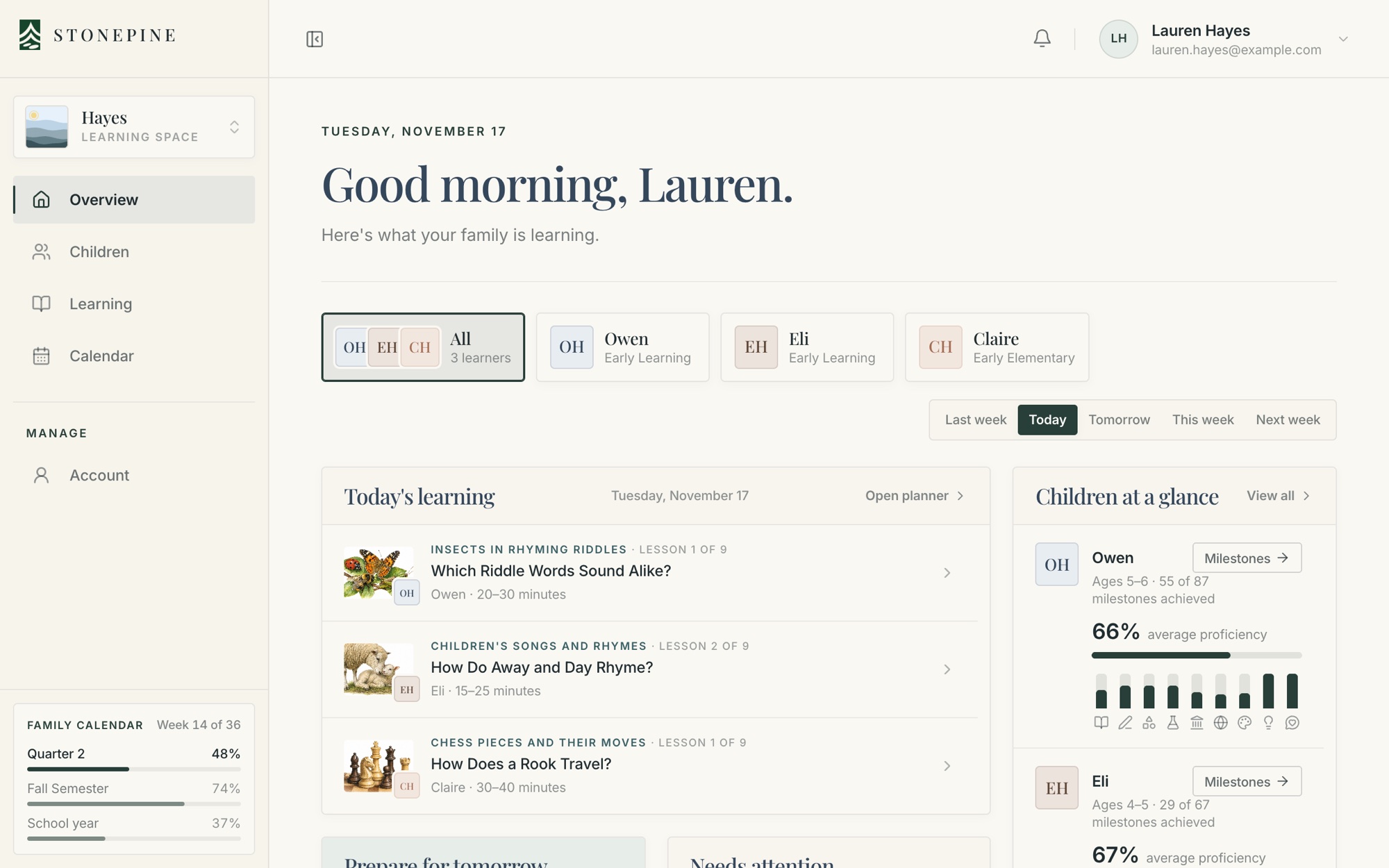
The Stonepine overview for Tuesday, November 17: today’s lesson for each of the Hayes children, Owen, Eli and Claire, their milestones at a glance and the units coming up
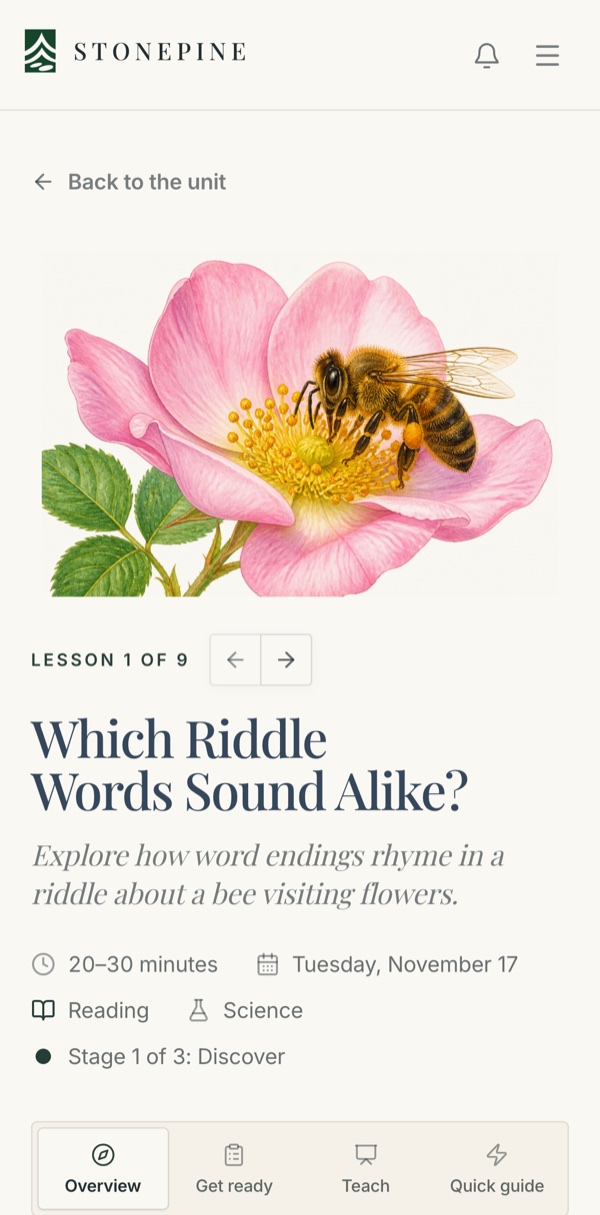
A lesson on a phone: Which Riddle Words Sound Alike?, lesson 1 of 9 in Owen’s unit Insects in Rhyming Riddles, with its painting of a honeybee on a wild rose, its minutes, its day and its subjects

Each is given a bag of tools, A shapeless mass, A book of rules;

And each must make, Ere life is flown, A stumbling block Or a steppingstone.

R. L. Sharpe A Bag of Tools

A good education begins at home.

Every child deserves a sound education and the time to master it. We’re building Stonepine so parents can give them both, without cutting corners on the knowledge and skills that matter.

See the sample lesson

Early access begins December 2026. Free for 30 days with one learner.